Craft Fair Review: Fisherman Redwork Embroidery
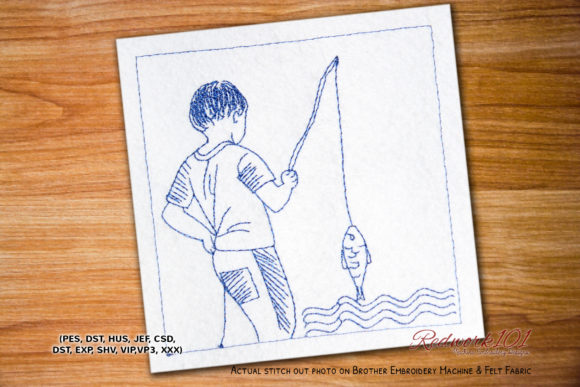
From my booth, I see customers gravitate toward designs that tell a simple, recognizable story. Fisherman with Rod and Fish Redwork does exactly that. It’s a rustic, nostalgic illustration perfect for the Camping category. The optional box stitch border mentioned—and the note that its color can vary or be skipped—means this is a flexible, core-focused design. My first impression is that it feels rustic and decorative, with a soft, hand-drawn quality that elevates handmade products.
Where This Design Wins at a Market Booth
Imagine your display: tote bags, aprons, tea towels, caps, and pouches arranged by theme. Fisherman with Rod and Fish Redwork would stand out in a section dedicated to outdoors, cabins, or rustic kitchenware. It’s not overly funny or festive; it’s a classic, premium-looking accent. Customers notice it because it’s instantly understandable—a man, a rod, a caught fish. That clarity is gold for quick booth engagement.
On specific products, it performs differently:
- Tote Bags & Market Bags: As a large focal point on natural canvas, it looks excellent. The redwork style (typically single-color stitching) gives a clean, artful feel.
- Aprons & Kitchen Towels: Perfect for the ‘camp chef’ or rustic kitchen aesthetic. On textured towels, ensure your stabilizer is right to handle the fabric weave.
- Caps: Be cautious. The curved surface can distort the design, and small details might lose clarity. Test on a scrap cap first.
- Embroidered Patches: A fantastic application. This design would make a sought-after patch for jackets or backpacks, especially if the optional border is omitted for a cleaner look.
- Pillow Covers & Small Pouches: As a smaller accent on these items, it adds a giftable, handmade quality without overwhelming the product.
Practical Production for Your Small Shop
Your success depends on repeatable, batch-friendly production. Fisherman with Rod and Fish Redwork, as described, seems promising. The optional box frame means you can adapt it for speed—skipping it simplifies the embroidery file run. However, always test the design on scrap fabric first. Check for dense stitch areas in the fisherman or fish that might pucker on thin fabrics. Review thread contrast; a classic red on navy or cream looks sharp, but on dark fabric, you may need a brighter top thread.
Key points for your embroidery business:
- Photography for Etsy: This design photographs well for online listings. Its clear subject and likely minimal color palette look great in printable mockups and real booth samples.
- Batch Production: It feels repeatable. Without complex color changes, it’s efficient for multiple tote bags or tea towel embroidery runs.
- Scale: It likely works as both a small accent and a larger focal design. But beware: tiny details (like the fishing rod line or fish scales) may blur at very small sizes. Confirm your minimum hoop size with the actual embroidery file.
Careful-Use Notes from an Embroidery Designer
Every design has its quirks. Based on the description, here’s my advice:
- Stitch Density & Fabric: Redwork often uses satin or fill stitches. On thick fabrics like canvas for tote bags, this is fine. On lightweight fabrics for pouches, use a sturdy stabilizer to prevent pulling.
- The Optional Border: The note says the box color is often different. If you use it, consider a contrasting thread to frame the scene. If you skip it, the design becomes more minimal and modern, possibly increasing its appeal.
- Small Lettering: The description doesn’t mention text, which is good. Designs with small lettering are tricky at craft fairs—people want to read it from a distance.
- Dark Fabric: If stitching on dark materials, ensure your thread color pops. A classic red might need to shift to a brighter crimson or orange for visibility.
Turning a Digital File into Booth Sales
Fisherman with Rod and Fish Redwork impacts your booth’s strength. It adds brand consistency if you specialize in rustic or camping themes. Its visual appeal is subtle but strong, suggesting handmade quality and thoughtful design. This increases perceived product value.
Before you stitch dozens of products, do this:
- Create at least one real mockup on the final product—a tea towel or tote bag—to judge in-person appeal.
- Compare fabric colors. Does it look best on natural linen, white cotton, or olive green?
- Inspect the stitch density on your test piece. Are there any jump stitches that need trimming for a cleaner finished product?
- Most importantly: Confirm the commercial licensing of the digital embroidery file. Never assume; check the license terms before selling finished products at a craft fair or on Etsy.
Ultimately, this design is a solid candidate for your handmade product line. It’s straightforward to produce, easy for customers to love at a glance, and versatile across multiple craft fair products. By tailoring its application—perhaps skipping the border for a cleaner patch, or using it fully for a decorative pillow—you can maximize its selling power at your weekend market booth.